In our science fair group there was Tehya, Rahul, Xander, Jeremy.We tested variable amounts of baking soda ,tartaric acid and water in a sealed plastic bag to see how much the plastic bag would inflate.
The one that was the most successful was the mixture of 3 tsp of each components because the bag inflated to almost full capacity.This is caused by carbon dixode being produced and released.
Thursday, July 4, 2013

Friday, June 14, 2013
Thing-a-mee
At room 5 we have been doing thing- a- mee. We have to make a character and it can be about anything - animal, plant, person. It could have ten legs, five arms and two heads for all I know!
We are creating a charcter and putting it through a series of adventures. It could be with a friend, sister, brother, mother, father, or by its self. The thing-a-mee could do anything - it could shoot fireballs it could have eyes that when you stare into them you turn into stone. The charcter could be good or evil be consided evil but acually be good. It could be anything we want it to be - its so exciting so watch this space!!!
By Lilly
Thursday, June 13, 2013
Catapault
On Wednesday 15th may we got set a task to make a catapault.
This was the equipment for it:
2 elastic bands
1 spoon
1 piece of wood
and 1 small green block
The objective was to use our own design and make a catapault to launch a small green block as far as possible.
The results were that the harder it was to pull the spoon back the more power it gets to rotate forward.
There were different sizes of spoons and different shapes and sizes of wood which made the small green block fling at different paces. Some of the green blocks went straight up in the air and some went way over our heads but there was one that no one could beat, because theirs went all the way into a tree. A lot of us found out that instead of stretching the spoon back you could just simply smack the end of the spoon to fling the green block up and over - although technically, this was cheating!


On Wednesday 15th may we got set a task to make a catapault.
This was the equipment for it:
2 elastic bands
1 spoon
1 piece of wood
and 1 small green block
The objective was to use our own design and make a catapault to launch a small green block as far as possible.
The results were that the harder it was to pull the spoon back the more power it gets to rotate forward.
There were different sizes of spoons and different shapes and sizes of wood which made the small green block fling at different paces. Some of the green blocks went straight up in the air and some went way over our heads but there was one that no one could beat, because theirs went all the way into a tree. A lot of us found out that instead of stretching the spoon back you could just simply smack the end of the spoon to fling the green block up and over - although technically, this was cheating!


Room 5 CSI
Last Friday there was a crime scene in the class room! Mrs Parker told us that $1000 had been stolen from the class 'safe'. We had senior crime officer detective Chris come in to investigate. We found that the criminal had pulled off the safe door and took the money.
Detective Chris got Hadlee to help him to try find any finger prints on the safe door, by using a special brush and powder. Hadlee lightly brushed over the safe door till he found some finger prints, once he found them, Detective Chris got out a special finger printing tape. This is a thick piece of plastic with one side sticky and the other not. He took the sticky side and stuck it over the finger prints and used a roller to push down on the tape to make sure the finger print stuck to it. He then pulled it up and stuck it down on white card.
He got Hadlee to take down everyone's fingerprints and have nicknames. And then Hadlee got out his magnifying glass and compared them to the criminals finger print.
There are three types of patterns you can have on your finger tips,
the whorl,
the arch and
the loop.

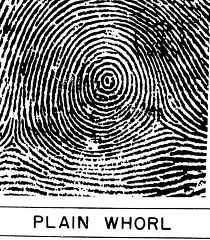

The criminal's finger print pattern had the whorl on it and there were only three people in class that had a whorl on their finger prints Melvyn, Bob and Nemo and Melvyn was the thief all that time.
p.s. The 'safe' was a wooden box, the '$1000' was actually a bag of lollies :)


Detective Chris got Hadlee to help him to try find any finger prints on the safe door, by using a special brush and powder. Hadlee lightly brushed over the safe door till he found some finger prints, once he found them, Detective Chris got out a special finger printing tape. This is a thick piece of plastic with one side sticky and the other not. He took the sticky side and stuck it over the finger prints and used a roller to push down on the tape to make sure the finger print stuck to it. He then pulled it up and stuck it down on white card.
He got Hadlee to take down everyone's fingerprints and have nicknames. And then Hadlee got out his magnifying glass and compared them to the criminals finger print.
There are three types of patterns you can have on your finger tips,
the whorl,
the arch and
the loop.

The criminal's finger print pattern had the whorl on it and there were only three people in class that had a whorl on their finger prints Melvyn, Bob and Nemo and Melvyn was the thief all that time.
p.s. The 'safe' was a wooden box, the '$1000' was actually a bag of lollies :)


Wednesday, June 12, 2013
Explanations
We have been learning about what an explanation is. An explanation is when you explain what something is step by step. On Thursday we started to write an explanation about what an egg timer is. This is my explanation:
An egg timer is a very different thing to normal timers. An egg timer is a timer that times how long you need to boil your egg. An egg timer consist of the frame, the glass and the sand on the inside.
The frame of an egg timer helps the timer stand upright. The frame can be made out of metal,wood,plastic and maybe even brass. What ever the frame is made of it doesn't matter.
The glass of the hour glass or egg timer is wide at the top,skinny in the middle and wide at the bottom. The size of an egg timer can be small,medium or large.
The sand in the egg timer has to be very fine to fit through the middle of the timer. The sand will most likely be smaller than a grain of sugar.
The way that an hour glass works: When you put your egg on boil, you get your hour glass and flip it over so that the sand is at the top and is flowing down to the bottom. When all of the sand is at the bottom your egg is ready.

The glass of the hour glass or egg timer is wide at the top,skinny in the middle and wide at the bottom. The size of an egg timer can be small,medium or large.
The sand in the egg timer has to be very fine to fit through the middle of the timer. The sand will most likely be smaller than a grain of sugar.
The way that an hour glass works: When you put your egg on boil, you get your hour glass and flip it over so that the sand is at the top and is flowing down to the bottom. When all of the sand is at the bottom your egg is ready.
Science
On Wednesday 15th may we started learning about science. We were given 2 questions
The first one was....what happens to an apple when we cut in half and leave it?
We learnt that an apple turns brown because of a reaction called "oxidation",which is caused by oxygen from the air. Oxygen is one of the most reactive chemicals known. There are many kinds of oxidation reactions. Others include burning and rusting. All chemical reactions run slower in low temperatures, so putting an apple into the fridge slows down the browning of it.
The 2nd question was.....why, when we pour a glass of lemonade or beer do we get lots of lines of bubbles floating upwards?
The process to make these drinks produces Carbon Dioxide (Co2) which is dissolved in beer. The pressure in the bottle holds the gas in its dissolved state, so when you open the bottle the Co2 comes out. It stops being dissolved and forms bubbles in the miniscule cracks in the glass that cannot be seen, this explains why strains of bubbles come out of the glass with lemonade e.t.c.
The first one was....what happens to an apple when we cut in half and leave it?
We learnt that an apple turns brown because of a reaction called "oxidation",which is caused by oxygen from the air. Oxygen is one of the most reactive chemicals known. There are many kinds of oxidation reactions. Others include burning and rusting. All chemical reactions run slower in low temperatures, so putting an apple into the fridge slows down the browning of it.
The 2nd question was.....why, when we pour a glass of lemonade or beer do we get lots of lines of bubbles floating upwards?
The process to make these drinks produces Carbon Dioxide (Co2) which is dissolved in beer. The pressure in the bottle holds the gas in its dissolved state, so when you open the bottle the Co2 comes out. It stops being dissolved and forms bubbles in the miniscule cracks in the glass that cannot be seen, this explains why strains of bubbles come out of the glass with lemonade e.t.c.
Thursday, May 9, 2013
Homeward Bound :(
Finally left Brigantine at noon today. Very mixed emotions to be honest as this has been an amazing trip for me. I now have the long journey of heading home.
I leave Brigantine at 1.30 and catch a train to New York which will arrive around 4.30. After this, I need to stay in New York for the night and then go to JFK airport tomorrow morning for my flight to Hawaii which leaves at 10am. This is approximately a 13hr flight. When I arrive in Hawaii, it will be 10am (local time). I have one night here and then fly out the following day at 3pm to Auckland. This is an 8.5hr journey and when I arrive in Auckland, it will be 10pm (local time). Finally, I get a plane from Auckland on Sunday morning at 8am and arrive in Nelson at 10am just in time for Mothers Day :).
I am so looking forward to seeing you all on Monday - I may have matchsticks holding my eyelids open but I have so much to tell you all :)))))
Below are some photos of Philadelphia train station, its pretty impressive inside


I leave Brigantine at 1.30 and catch a train to New York which will arrive around 4.30. After this, I need to stay in New York for the night and then go to JFK airport tomorrow morning for my flight to Hawaii which leaves at 10am. This is approximately a 13hr flight. When I arrive in Hawaii, it will be 10am (local time). I have one night here and then fly out the following day at 3pm to Auckland. This is an 8.5hr journey and when I arrive in Auckland, it will be 10pm (local time). Finally, I get a plane from Auckland on Sunday morning at 8am and arrive in Nelson at 10am just in time for Mothers Day :).
I am so looking forward to seeing you all on Monday - I may have matchsticks holding my eyelids open but I have so much to tell you all :)))))
Below are some photos of Philadelphia train station, its pretty impressive inside


Subscribe to:
Posts (Atom)